Welcome back to The Studying Speechy, where I turn speech pathology research into meaningful, everyday insights! As I continue my journey towards becoming a speech pathologist, I am discovering that some of the most important clues about a child’s communication development can be found in the smallest sounds, gestures and interactions.
Today, I am reflecting on research by Highman (2023), exploring the early identification and treatment of suspected Childhood Apraxia of Speech (CAS) in infants and toddlers. CAS is a neurological speech motor disorder that affects a child’s ability to plan and coordinate the movements needed for speech. What particularly stood out to me is how difficult it can be to identify CAS in very young children who are not yet speaking consistently.
This made me question something important: how do we recognise when a child needs support if they are too young to tell us what they are experiencing?
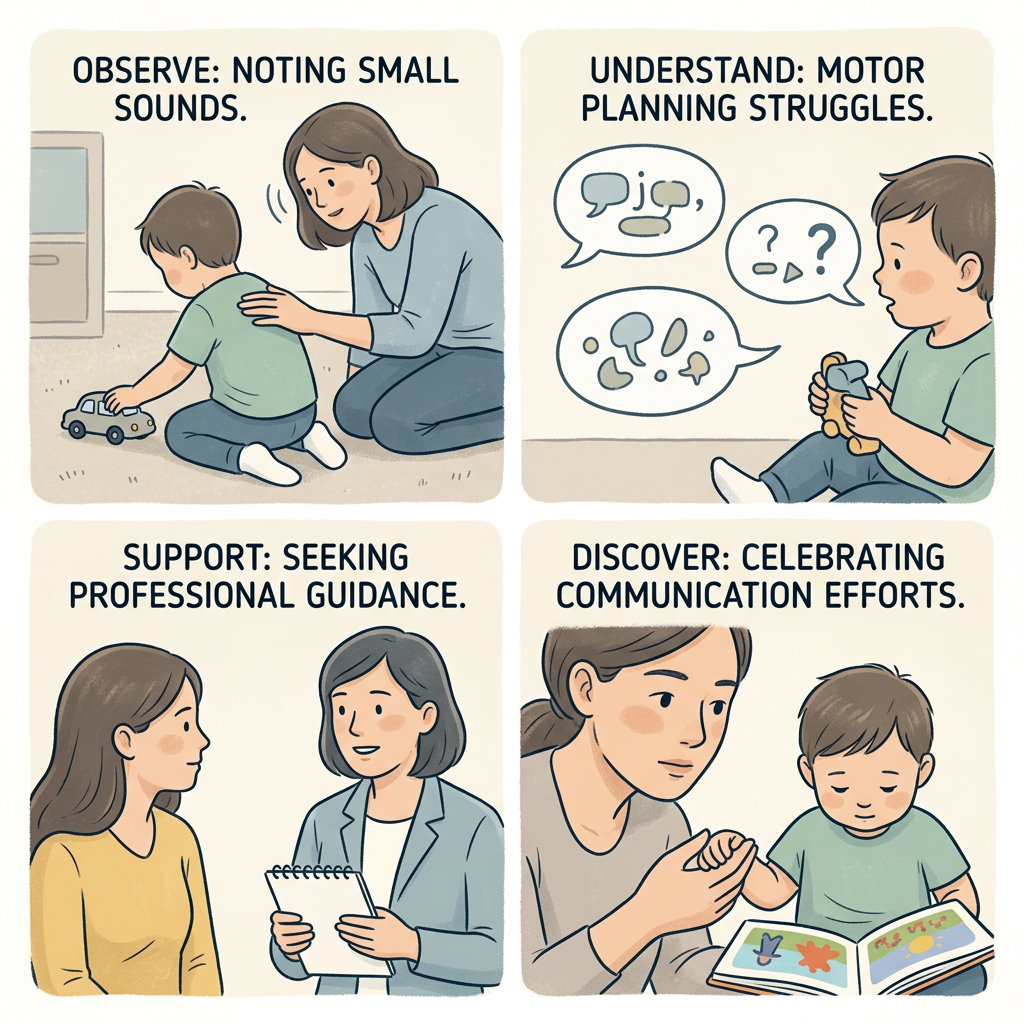
One key learning from this research is the importance of looking beyond spoken words. For example, a toddler might understand familiar instructions but struggle to communicate verbally. Similarly, an infant who vocalises less frequently or shows limited variation in babbling may present developmental signs worth investigating. These observations do not automatically mean a child has CAS, but they remind me that communication development involves much more than simply counting the words a child can say.
As a developing speech pathology student, I am beginning to understand how important it is to observe carefully, consider the whole child and avoid making assumptions based on one behaviour. I am learning that professional judgement involves recognising potential concerns while acknowledging uncertainty. Rather than rushing towards a diagnosis, we need to consider developmental history, multiple observations and the possibility of other explanations, working collaboratively with families and other professionals when appropriate.
My biggest takeaway? Early support does not always need to wait for a definitive diagnosis.
The research highlights the potential value of early intervention, particularly while young children are developing their communication skills. I found this encouraging because it shifts the focus from what a child cannot yet do to the opportunities we have to support their emerging abilities. Play-based interactions, frequent opportunities to communicate and caregiver coaching can help create meaningful experiences for children with suspected speech motor difficulties. Intervention must still be individualised and guided by appropriate clinical assessment, but there is real value in responding to a child’s needs rather than waiting for a label.
I can imagine how this might look in everyday life: making an enthusiastic “whee!” sound while sliding down a slide, exploring “moo” and “baa” with toy animals, or responding warmly when a baby experiments with a new sound. These moments might seem small, but they create opportunities for connection, imitation and communication. They also remind me that parents and caregivers are important partners in supporting a child’s development.
Reflecting on this research has changed the way I think about early communication. I used to think more about speech in terms of words, sounds and whether a child was meeting developmental milestones. I am now learning to look more closely at the communication behaviours underneath those milestones, including vocalisations, sound variety, attempts to imitate and the relationship between understanding and expression.
For me, this is what makes speech pathology so meaningful. It is not simply about helping children pronounce words; it is about recognising their potential, understanding their individual needs and helping them find ways to connect with the world around them.
💬 Let’s chat! What sounds, gestures or little attempts at communication have you noticed children making during play? Sometimes, the smallest interactions can teach us the biggest lessons about communication.

Leave a Reply